
The department is well established and having well qualified and experienced staff members. Prof. Sardar Vishwadeep S. is the Head of the Department.
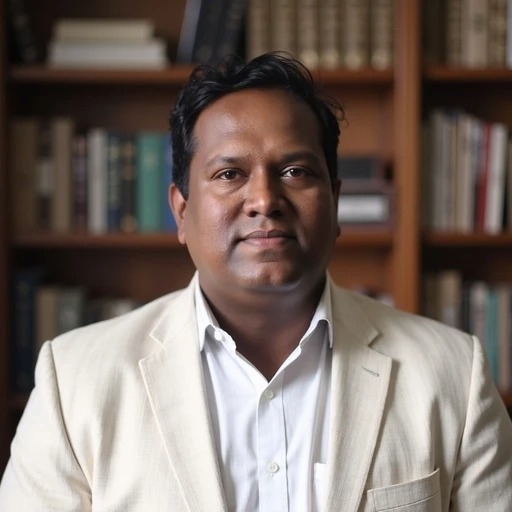
Prof. Sardar Vishwadeep S.
HOD Mechanical Engg.
B.E. (Mech), M.E. (Mechanical Design)
Email: vishwadeep.sardar@sigce.edu.in | hod.mechanical@sigce.edu.in
A hearty welcome to the Department of Mechanical Engineering at Smt. Indira Gandhi College of Engineering, Navi Mumbai.
The department vision is to be excellence in value based Mechanical Engineering Education. The department has well qualified and dedicated faculty. The department strives to impart knowledge and training of the highest standard. The objective of the department is to prepare students for a successful career in Industry, Research and Academics to meet the needs of growing technology. Our efforts are to develop the ability among students to synthesize data and technical concepts for various application and product design. We provide an opportunity for students to work as members of a team on multidisciplinary projects.
Prof. Sardar Vishwadeep .S obtained his Bachelor’s in Mechanical Engineering from the Parshvanath College of Engineering, Thane in 2010 and completed Master’s in Mechanical Engineering from D. Y. Patil Institute of Technology, Savitribai Phule Pune University in 2018. Currently, he is an Assistant Professor and HOD in the Department of Mechanical Engineering. He has 14 years of teaching experience and has many papers in the national and international conferences and journals. He has attended several Short Term Training Programme. He is the life member of the ISTE. He is a Guide, External examiner, Paper Setter at UG level.
Areas of interest: Machine Design, Design of Mechanical Systems, Product Design-Development and Optimization Techniques etc.
Department is conducting Industrial Visits, Value Added Course related to Mechanical Engineering and arranging technical seminars & workshops to upgrade the knowledge of the students and staff.
Department has good co-ordination between staff and students.
Thank you for visit !
Vision of the College
To serve and have a transformative impact on society by constantly pursuing excellence in technical education, innovation and entrepreneurship for human development with strong ethical values.
Mission of the College
Mission
Serve and help transform society by graduating talented, broadly educated engineers, equipped with state of art technology resources for developing sustainable solutions.
Academic excellence in Science, Engineering and Technology through dedication to duty, commitment to research, innovation in learning and faith in human values.
Cultivate the spirit of entrepreneurship and the connection between academia and industry that fosters problem solving through collaboration
Enable the students to develop into outstanding professionals with high ethical standards capable of creating, developing and managing global engineering enterprises.
Vision of the Department
The Mechanical Engineering Department endeavours to be recognized for outstanding education leading to employable engineers to shoulder the responsibilities of transforming the nation.
Mission of the Department
Create competent Mechanical Engineering graduates by providing excellent infrastructure and facilities.
Develop industry ready multifaceted graduates by promoting Industry-Institute Relations.
To provide the students with academic environment of excellence, leadership, ethical guidelines and lifelong learning.
Program Outcomes (PO)
POs are statements that describe what students are expected to know and be able to do upon graduating from the program. These relate to the skills, knowledge, analytical ability, attitude and behavior that students acquire through the program.
The POs essentially indicate what the students can do from subject-wise knowledge acquired by them during the program. As such, POs define the professional profile of an engineering graduate. NBA has defined the followingtwelvePOs for an engineering graduate.These are in line with theGraduate Attributes as defined by the Washington Accord:
- i) Engineering Knowledge: Apply the knowledge of mathematics, science, engineering fundamentals, and an engineering specialization to the solution of complex engineering problems.
- ii) Problem Analysis: Identify, formulate, review research literature, and analyze complex engineering problems reaching substantiated conclusions using first principles of mathematics, natural sciences and engineering sciences.
iii) Design/Development of Solutions: Design solutions for complex engineering problems and design system components or processes that meet the specified needs with appropriate consideration for the public health and safety, and the cultural, societal, and environmental considerations.
- iv) Conduct Investigations of Complex Problems: Use research-based knowledge and research methods including design of experiments, analysis and interpretation of data, andsynthesisoftheinformationto provide valid conclusions for complexproblems: that cannot be solved by straightforward application of knowledge, theories and techniques applicable to the engineering discipline as against problems given at the end of chapters in a typical text book that can be solved using simple engineering theories and techniques; that may not have a unique solution. For example, a design problem can be solved in many ways and lead to multiple possible solutions; that require consideration of appropriate constraints / requirements not explicitly given in the problem statement such as cost, power requirement, durability, product life, etc.; which need to be defined (modeled) within appropriate mathematical framework; and that often require use of modern computational concepts and tools, for example, in the design of an antenna or a DSP filter.
- v) Modern Tool Usage: Create, select, and apply appropriate techniques, resources, and modern engineering and IT tools including prediction and modeling to complex engineering activities with an understanding of the limitations.
- vi) The Engineer and Society: Apply reasoning informed by the contextual knowledge to assess societal, health, safety, legal and cultural issues and the consequent responsibilities relevant to the professional engineering practice.
vii) Environment and Sustainability: Understand the impact of the professional engineering solutions in societal and environmental contexts, and demonstrate the knowledge of, and need for sustainable development.
viii) Ethics: Apply ethical principles and commit to professional ethics and responsibilities and norms of the engineering practice.
- ix) Individual and Team Work: Function effectively as an individual, and as a member or leader in diverse teams, and in multidisciplinary settings.
- x) Communication: Communicate effectively on complex engineering activities with the engineering community and with society at large, such as, being able to comprehend and write effective reports and design documentation, make effective presentations, and give and receive clear instructions.
- xi) Project Management and Finance: Demonstrate knowledge and understanding of the engineering and management principles and apply these to one’s own work, as a member and leader in a team, to manage projects and in multidisciplinary environments.
xii) Life-long Learning: Recognize the need for, and have the preparation and ability to engage in independent learning in the broadest context of technological change.
Program Specific Outcome (PSO)
PSO 1: The student will be able to apply the knowledge of Mathematics, Sciences and engineering fundamentals to formulate, analyse and provide solutions to the problems related to Mechanical engineering.
PSO 2: The students will be able to successfully apply the principles of design, analysis and implementation of mechanical systems/processes which have been learned as a part of the curriculum.
Teaching Faculty
M. Tech. (Heat Power Engg. VNIT Nagpur)
B.E. (Mechanical Engg. Mumbai University)
PhD.(Persuing)
Objective:
The primary objective of the Mechanical Engineering BoS is to ensure a relevant, outcome-based, industry-oriented, and continuously improving curriculum that develops technical knowledge, practical skills, innovation, professional competencies, and employability among students.
Overview:
The Board of Studies (BoS) in Mechanical Engineering is an academic body responsible for designing, reviewing, updating, and recommending the curriculum of the Mechanical Engineering programme. It ensures that the curriculum remains relevant to industry requirements, higher education, emerging technologies, and professional practices.
Key Functions of BoS:
- Curriculum Development
- Design and revise the curriculum as per academic and industry requirements.
- Introduce emerging areas such as AI/ML in Mechanical Engineering, Industry 4.0, Additive Manufacturing, EV technology, Robotics, CAD/CAM, and Advanced Manufacturing.
- Review of Existing Curriculum
- Periodically evaluate the effectiveness and relevance of existing courses.
- Identify gaps and recommend modifications.
- Industry and Stakeholder Inputs
- Consider feedback from industry experts, alumni, students, faculty, employers, and academic experts.
- Ensure that graduates acquire industry-relevant skills.
- Course Structure and Content
- Recommend subjects, course outcomes, credits, teaching hours, practical components, and assessment methods.
- Maintain appropriate balance between theories, practical, projects, internships, and skill-based learning.
- Course Outcomes and Mapping
- Review Course Outcomes (COs) and their alignment with Programme Outcomes (POs), Programme Specific Outcomes (PSOs), and Programme Educational Objectives (PEOs).
- Value-Added and Skill Development
- Recommend value-added courses, certifications, workshops, internships, industrial training, and multidisciplinary courses.
- Academic Quality Improvement
- Review student performance, attainment of COs/POs, feedback, and academic results.
- Suggest measures for continuous improvement.
- Examination and Assessment
- Recommend suitable methods of internal and end-semester assessment.
- Ensure that assessment methods are aligned with the expected learning outcomes.
- Emerging Technologies and Industry Trends
- Incorporate current developments in mechanical engineering and prepare students for changing industry needs.
- Recommendations to Academic Authorities
- Discuss and recommend curriculum-related proposals to the appropriate Academic Council/competent authority for approval and implementation.
Members and Composition (2026-27)
| Sr. No. | Name of the Member | Committee Designation |
|---|---|---|
| 1 | Prof. Vishwadeep Sardar | Chairperson, BOS Mech. |
| 2 | Prof. Vivekanand Kishnaswamy | Member |
| 3 | Pro. Mahendra Bhoir | Member |
| 4 | Prof. Santosh Suryavanshi | Member |
| 4 | Prof. Satish Nimbalkar | Member |
| 5 | Dr. Uday Gudsoorkar | Member |
| 6 | Dr. Madhumita Bhattacharya | Member |
| 7 | Dr. Ganesh Kadam | University Nominee |
| 8 | Dr. Kiran More | External subject expert |
| 9 | Dr. Sidhappa Bhushnoor | External subject expert |
| 10 | Dr. Santosh Rane | External subject expert |
| 11 | Dr. Sachin Solanke | External subject expert |
| 12 | Mr. C L Shrivastava | Industry Expert |
| 13 | Mr. Naman singh and Pradip Chauhan | Alumini reprentative |
Important Documents
| Title | Date | View / Download |
|---|---|---|
| Office Order for Composition of AY 2026 - 27 | ||
| Notice of Meeting AY 2026-27 | ||
| Minutes of Meeting - AY 2026-27 | ||
| Action Taken Report - AY 2026-27 |
DAB
Roles and responsibilities of the DAB:
- Make recommendations for standard procedures and methods to achieve Program Educational Objectives (PEOs) and suggest enhancements to academic programs.
- Redesign current PEOs, specifying program-specific results and bringing PEO°s into line with mission statements.
- To suggest the appropriate course of action for students' skill development, entrepreneurship development, and quality enhancement.
- To determine and recommend push areas to carry out different tasks (training programs, final year projects, and extra experiments to satisfy PEOs).
Department Advisory Board (DAB)
| Sr. No. | Name of the Faculty members | Designation | Position of DAB |
|---|---|---|---|
| 1 | Prof.Vishwadeep Sardar | Assistant Professor,HOD Mechanical Engineering,SIGCE,Gahnsoli | Chairperson |
| 2 | Prof. vivekanand krishnaswamy | Assistant Professor SIGCE,Gahnsoli | Academician |
| 3 | Prof. Santosh Suryavanshi | Assistant Professor,
,SIGCE,Gahnsoli |
Faculty Member |
PAQIC
| S.N. | Name and Post | Position |
|---|---|---|
| 1 | Prof. Vishwajeet Sardar - HoD | Chairperson |
| 2. | Prof. Vivekananad K. - Faculty | Coordinator |
| 3. | Prof. Bhoir Mahendra - Faculty | Member |
| 4. | Prof. Santosh Suryavanshi - Faculty | Member |
Roles and Responsibilities
- It is established within departments to ensure structured evaluation at the program level.
- PAQIC frequently meets to evaluate student performance, analyze feedback from stakeholders (parents/alumni), and implement remedial actions for improvement.
- It is responsible for assessing program educational objectives (PEOs), mapping curriculum, and enhancing student learning outcomes.
Other Committees
Syllabus:
| Name | Scheme | Link |
|---|---|---|
| Second Year Syllabus | SIGCE NEP R25 Y2 | Click Here |
| Third Year Syllabus | TE NEP 2026-27 | Click Here |
| Final Year Syllabus | BE ‘C’ Scheme 2022-23 | Click Here |
Credit Distribution Structure:
| Broad Category Code | Course Catg. Code | Semester🡪 Course Type | 1 | 2 | 3 | 4 | 5 | 6 | 7 | 8 | Sub-Total | Tot | % |
|---|---|---|---|---|---|---|---|---|---|---|---|---|---|
| BSES | BS | Basic Science | 07 | 07 | 03 | 03 | 20 | 29 | 18.13 | ||||
| ES | Engineering Science | 06 | 03 | 09 | |||||||||
| PRC
(Program Related Courses) |
PC | Program Core | 03 | 11 | 11 | 08 | 08 | 04 | 45 | 80 | 50 | ||
| PE | Program Elective | 04 | 03 | 06 | 13 | ||||||||
| RM | Research Methodology | 02 | 02 | ||||||||||
| CP | Community Engagement Project | 02 | 02 | ||||||||||
| PR | Project | 01 | 01 | 02 | 02 | 06 | |||||||
| IN | Internship / OJT | 12 | 12 | ||||||||||
| MDM + OE | MM | Multidisciplinary Minor | 03 | 03 | 04 | 04 | 14 | 22 | 13.75 | ||||
| OE | Open Elective | 02 | 02 | 02 | 02 | 08 | |||||||
| SEC (Skill Enhance-ment Courses) |
VS | Voc. and Skill Enhancement | 02 | 04 | 02 | 03 | 01 | 12 | 22 | 13.75 | |||
| AE | Ability Enhancement | 02 | 01 | 01 | 04 | ||||||||
| IK | Indian Knowledge System | 02 | 02 | ||||||||||
| VE | Value Education | 02 | 02 | 04 | |||||||||
| HSSM | EM | Entrepreneurship / Mgmt. | 02 | 02 | 04 | 04 | 2.50 | ||||||
| CC (LLC) | CC | Co-Curricular | 02 | 01 | 03 | 03 | 1.87 | ||||||
| Total | 21 | 21 | 22 | 22 | 19 | 19 | 20 | 16 | 160 | 160 | 100 |
Course Detail:
Semester 3
| Teaching Scheme | Credit Assigned | ||||||||||||
|---|---|---|---|---|---|---|---|---|---|---|---|---|---|
| Course Code | Broad Catg. | Course Name | Course Choice | CR | Lab | SL | TE | L | T | P/ D | TC | ||
| L | T | P | D | ||||||||||
| MEBS231 | BS | Engineering Mathematics - III | Compulsory | 2 | 1 | - | - | 3 | 6 | 2 | 1 | - | 3 |
| MEPC231 | PC | Strength of Materials | Compulsory | 3 | - | 2 | - | 3 | 8 | 3 | - | 1 | 4 |
| MEPC232 | PC | Materials and Manufacturing Technology | Compulsory | 3 | - | 2 | - | 3 | 8 | 3 | - | 1 | 4 |
| MEPC233 | PC | Thermodynamics | Compulsory | 3 | - | - | - | 3 | 6 | 3 | - | - | 3 |
| IGOE23x | OE | Open Elective | Choice Based* | 2 | - | - | - | 2 | 4 | 2 | - | - | 2 |
| MEVS231 | VS | CAD Modelling and Working Drawing Lab | Compulsory | 2 | 2 | - | 4 | - | - | 2 | 2 | ||
| IGAE231 | AE | Comprehensive Soft Skills and Professional Development | Compulsory | - | - | 2 | - | 2 | - | - | 1 | 1 | |
| IGEM231 | EM | Entrepreneurship and Business Model Development | Compulsory | - | - | 2 | 2 | - | 4 | - | - | 2 | 2 |
| IGCC11x | CC | CO-CURRICULAR
COURSES |
Compulsory | - | - | 2 | - | - | 2 | - | - | 1 | 1 |
| TOTAL | 13 | 1 | 12 | 4 | 14 | 44 | 13 | 1 | 8 | 22 | |||
Semester 4
| Teaching Scheme | Credit Assigned | ||||||||||||
|---|---|---|---|---|---|---|---|---|---|---|---|---|---|
| Course Code | Broad Catg. | Course Name | Course Choice | CR | Lab | SL | TE | L | T | P/ D | TC | ||
| L | T | P | D | ||||||||||
| MEBS241 | BS | Finite Element Analysis | Compulsory | 2 | - | 2 | - | 2 | 6 | 2 | - | 1 | 3 |
| MEPC241 | PC | Fluid Mechanics | Compulsory | 3 | - | 2 | - | 3 | 8 | 3 | - | 1 | 4 |
| MEPC242 | PC | Kinematics & Controls | Compulsory | 3 | - | 2 | - | 3 | 8 | 3 | - | 1 | 4 |
| MEPC243 | PC | Mechanical Measurement and Control | Compulsory | 3 | - | - | - | 3 | 6 | 3 | - | - | 3 |
| IGOE24x | OE | Open Elective-2 | Choice Based* | 2 | - | - | - | 2 | 4 | 2 | - | - | 2 |
| IGEM241 | EM | Design Thinking | Compulsory | - | - | 2 | 2 | - | 4 | - | - | 2 | 2 |
| MEVS241 | VS | AI Tools | Compulsory | - | - | 2 | 2 | - | 4 | - | - | 2 | 2 |
| IGVS241 | VS | Engineering Fundamentals and Technical Skills | Compulsory | - | - | 2 | - | - | 2 | - | - | 1 | 1 |
| MEPR241 | PR | Mini Project 1 | Compulsory | - | - | 2 | - | - | 2 | - | - | 1 | 1 |
| TOTAL | 13 | - | 14 | 4 | 13 | 44 | 13 | - | 9 | 22 | |||
| Third Year Mechanical Engineering | |||
| SEM V | SEM VI | ||
| Course Code | Course Name | Course Code | Course Name |
| MEC501 | Mechanical Measurements and Controls | MEC601 | Machine Design |
| MEC502 | Thermal Engineering | MEC602 | Turbo Machinery |
| MEC503 | Dynamics of Machinery | MEC603 | Heating, Ventilation, Air conditioning and Refrigeration |
| MEC504 | Finite Element Analysis | MEC604 | Automation and Artificial Intelligence |
| MEDLO501X | Department Level Optional Course – 1 | MEDLO602X | Department Level Optional Course – 2 |
| MEL501 | Thermal Engineering | MEL601 | Machine Design |
| MEL502 | Dynamics of Machinery | MEL602 | Turbo Machinery |
| MESBL501 | Professional communication and ethics –II | MEL603 | Heating, Ventilation, Air conditioning and Refrigeration |
| MEPBL501 | Mini Project – 2 A | MESBL601 | Measurements and Automation |
| MEL503 | Finite Element Analysis | MEPBL601 | Mini Project – 2 B |
| MESBL501 | Professional communication and ethics –II | ||
| Department Level Optional Course – 1 | Department Level Optional Course – 2 | ||
| MEDLO5011 | Optimization Techniques | MEDLO6021 | Press Tool Design |
| MEDLO5012 | Design of Experiments | MEDLO6022 | Tool Engineering |
| MEDLO5013 | Computational Methods | MEDLO6023 | Metal Forming Technology |
| Fourth Year Mechanical Engineering | |||
| SEM VII | SEM VIII | ||
| Course Code | Course Name | Course Code | Course Name |
| MEC701 | Design of Mechanical System | MEC801 | Operations Planning and Control |
| MEC702 | Logistics and Supply Chain Management | MEDLO805X | Department Level Optional Course – 5 |
| MEDLO703X | Department Level Optional Course – 3 | MEDLO806X | Department Level Optional Course – 6 |
| MEILO701X | Institute Level Optional Course – I | MEILO802X | Institute Level Optional Course – 2 |
| MEL701 | Design of Mechanical System | MEL801 | Product Design and Development |
| MEL702 | Maintenance Engineering | MEL802 | Laboratory based on IoT |
| MEL703 | Industrial Skills | MEP801 | Major Project II |
| MEP701 | Major Project I | ||
| Department Level Optional Course | |||
| Course Code | Sem. VII: Department Optional Course- 3 | Course Code | Sem. VIII: Department Optional Course- 5 |
| MEDLO7031 | Automotive Power Systems | MEDLO8051 | Composite Materials |
| MEDLO7032 | Renewable Energy Systems | MEDLO8052 | Smart Materials |
| MEDLO7033 | Vehicle Systems | MEDLO8053 | Micro Electro Mechanical Systems |
| Course Code | Sem. VII: Department Optional Course – 4 | Course Code | Sem. VIII: Department Optional Course – 6 |
| MEDLO7041 | Machinery Diagnostics | MEDLO8061 | Product Design and Development |
| MEDLO7042 | Vibration Controls | MEDLO8062 | Design for X |
| MEDLO7043 | Advanced Vibration | MEDLO8063 | Total Quality Mana |
| Course Code | Institute Level Optional Course – I | Course Code | Institute Level Optional Course – 2 |
| ILO7011 | Product Lifecycle Management | ILO8021 | Project Management |
| ILO7012 | Reliability Engineering | ILO8022 | Finance Management |
| ILO7013 | Management Information System | ILO8023 | Entrepreneurship Development and Management |
| ILO7014 | Design of Experiments | ILO8024 | Human Resource Management |
| ILO7015 | Operation Research | ILO8025 | Professional Ethics and CSR |
| ILO7016 | Cyber Security and Laws | ILO8026 | Research Methodology |
| ILO7017 | Disaster Management and Mitigation Measures | ILO8027 | IPR and Patenting |
| ILO7018 | Energy Audit and Management | ILO8028 | Digital Business Management |
| ILO7019 | Development Engineering | ILO8029 | Environmental Management |
Lab Name:- Work Shop
Overview
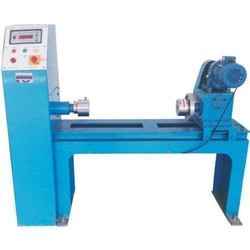
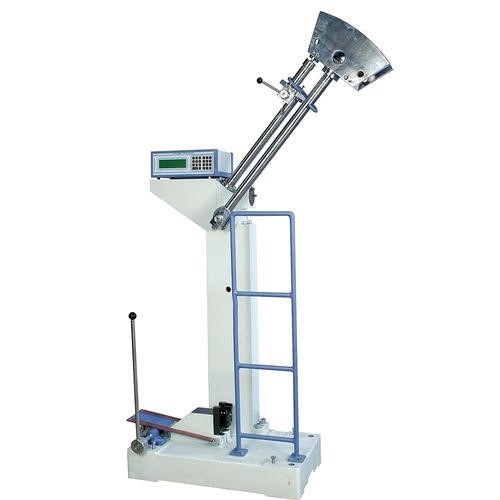
The strength of the materials laboratory is well equipped with destructive testing machinery. This lab course is offered in the second year for the students from mechanical engineering. Students will be able to understand the theoretical concepts of the solid mechanics course and enable them to apply it practically in this lab. Different types of tests are being conducted in this laboratory to know the various mechanical properties of a material such as young’s modulus, shear modulus, hardness, toughness, deflection, torsion test etc.
A unique feature of this lab is the “Universal Testing Machine (UTM)”. 60 ton capacity the machine is integrated with the computer.
Pictures
Charpy and Izod Impact Testing Machine
Torsion Test Machine
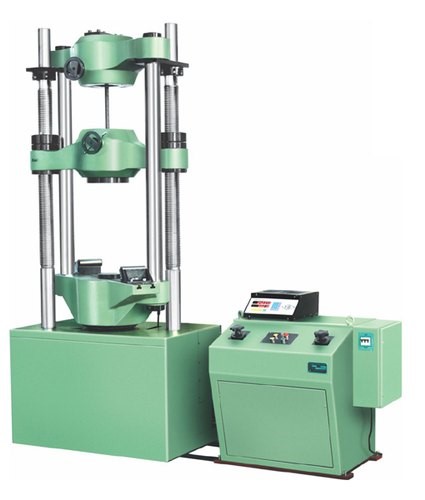
Universal Testing Machine
Lab Name:- Material Technology Laboratory
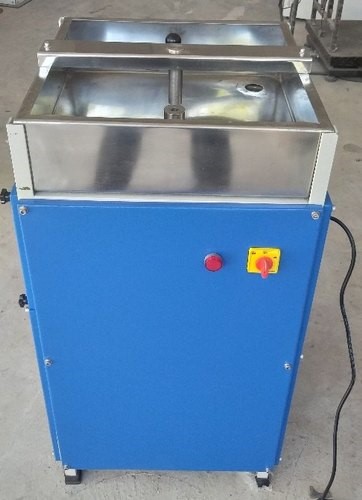
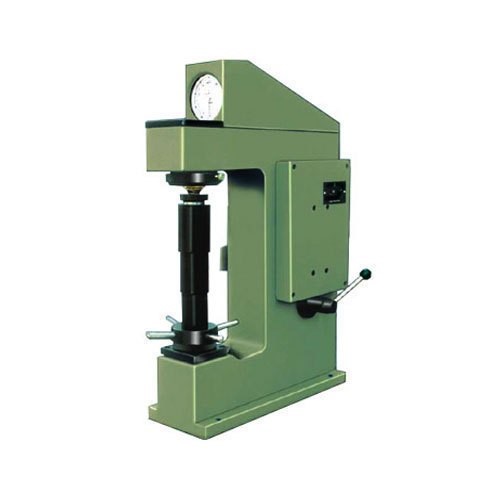
The Material Technology Laboratory consists of various ferrous and non-ferrous specimens, specimen preparation machines, like Disc polishing machine, Abrasive belt machine etc. material microstructure analysis using microscopes and material testing equipments like hardness, hardenability (Jominy end quench) and heat treatment using Muffle furnaces. The students understand their theoretical knowledge of Materials Technology. The students are encouraged to prepare the specimen material and study the microstructure.
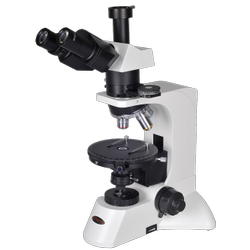
Metallurgical Microscope
Rockwell Hardness Tester
Jominy-end Quench Test Apparatus
Lab Name:- Fluid Mechanics Laboratory
The fluid mechanics range offers a wide scope of teaching equipment for the delivery of complete courses in fluid dynamics.
In many settings, the modular Hydraulic Bench acts as a base unit, allowing tutors to swap out individually mounted experiment modules on these self-contained benches, reducing lab set-up time, lab space requirements, and cost.
Within the fluid mechanics range there is equipment for demonstrating Bernoulli's theorem, orifice meter, pressure and flow measurement, pipe friction and energy loss, and much more.
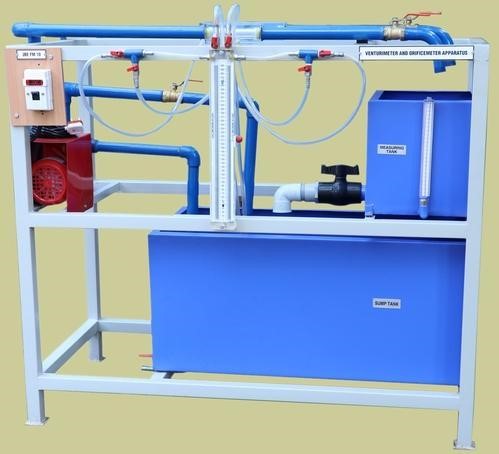
Losses in Pipe apparatus
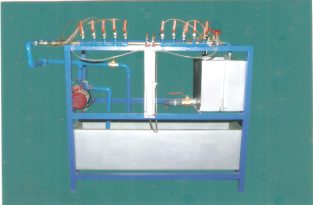
Venturi Meter And Orifice Meter Apparatus
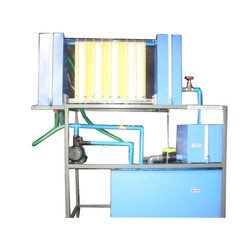
Verification of Bernoulli’s Theorem
Lab Name:- Fluid Mechanics Laboratory
A well-equipped computer lab with advanced facilities is established for the benefit of the Mechanical engineering students. High end terminals supported by latest hardware and software. Advanced Mechanical Engineering software are procured for making the students globally competitive and industry ready. AutoCAD lab, students get professional training on 2D & 3D drafting of Mechanical engineering drawings using the latest version of AutoCAD software and SOLIDWORK software. Student will learn computer aided design layout and 3D solid modeling.
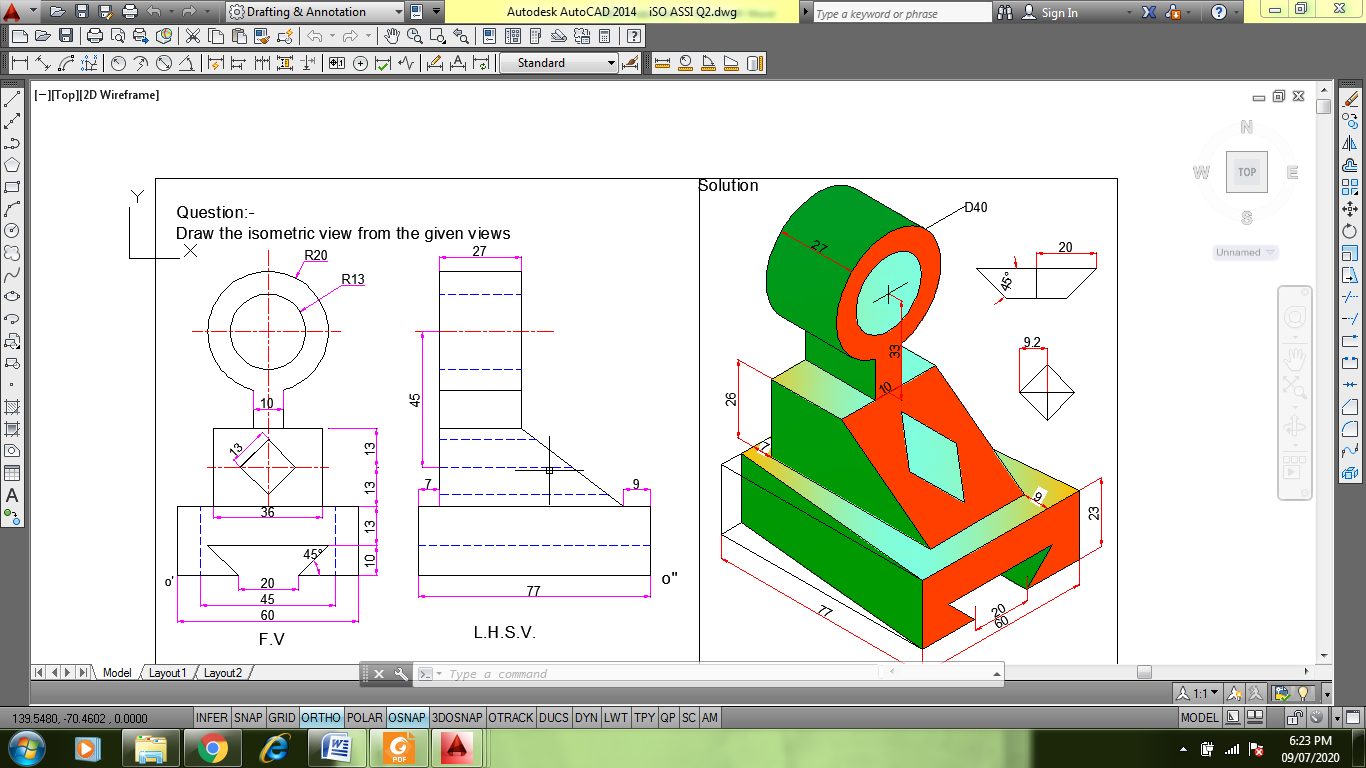
Auto CAD Drawings
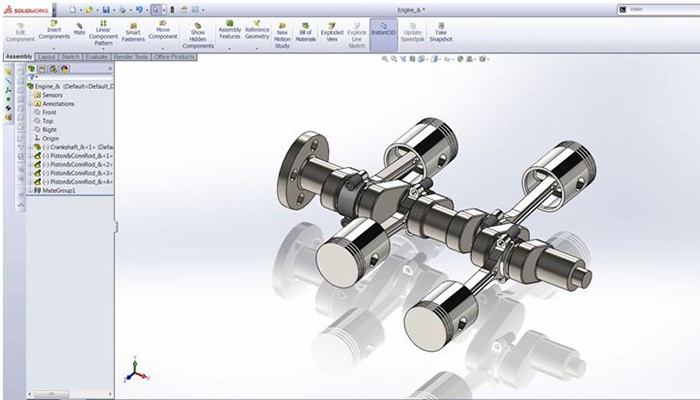
SOLIDWORK Screen (assembly of Engine parts)
Lab Name:- Industrial Electronics Laboratory
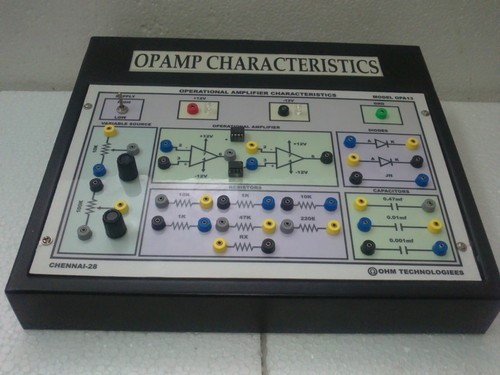
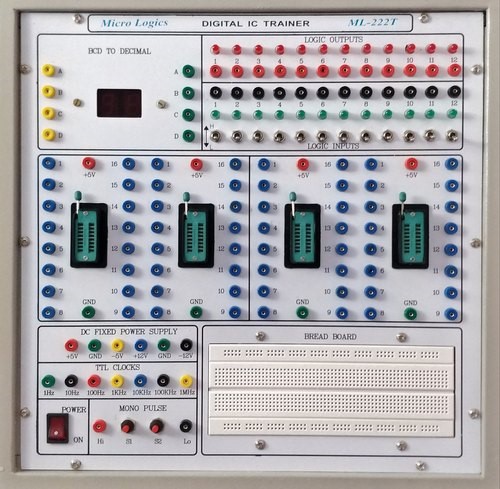
Industrial Electronics is one of the course for SE Mechanical Engineering. The Industrial electronics lab consists of all essential equipments like Bread board system, DSO, CRO, function generator, power electronics kits, digital logic trainer kits, OPAMP based kits ,which are used by the students to enhance the knowledge of basic electronics and prepare them to work in the development, installation, testing, maintenance and repair of electrical and electronics systems.
Digital Logic Trainer kit
Opamp Circuit Trainer kit
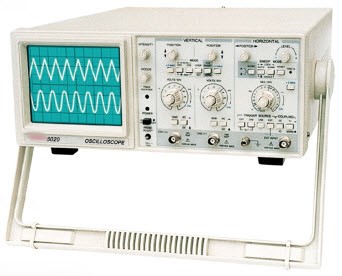
CRO
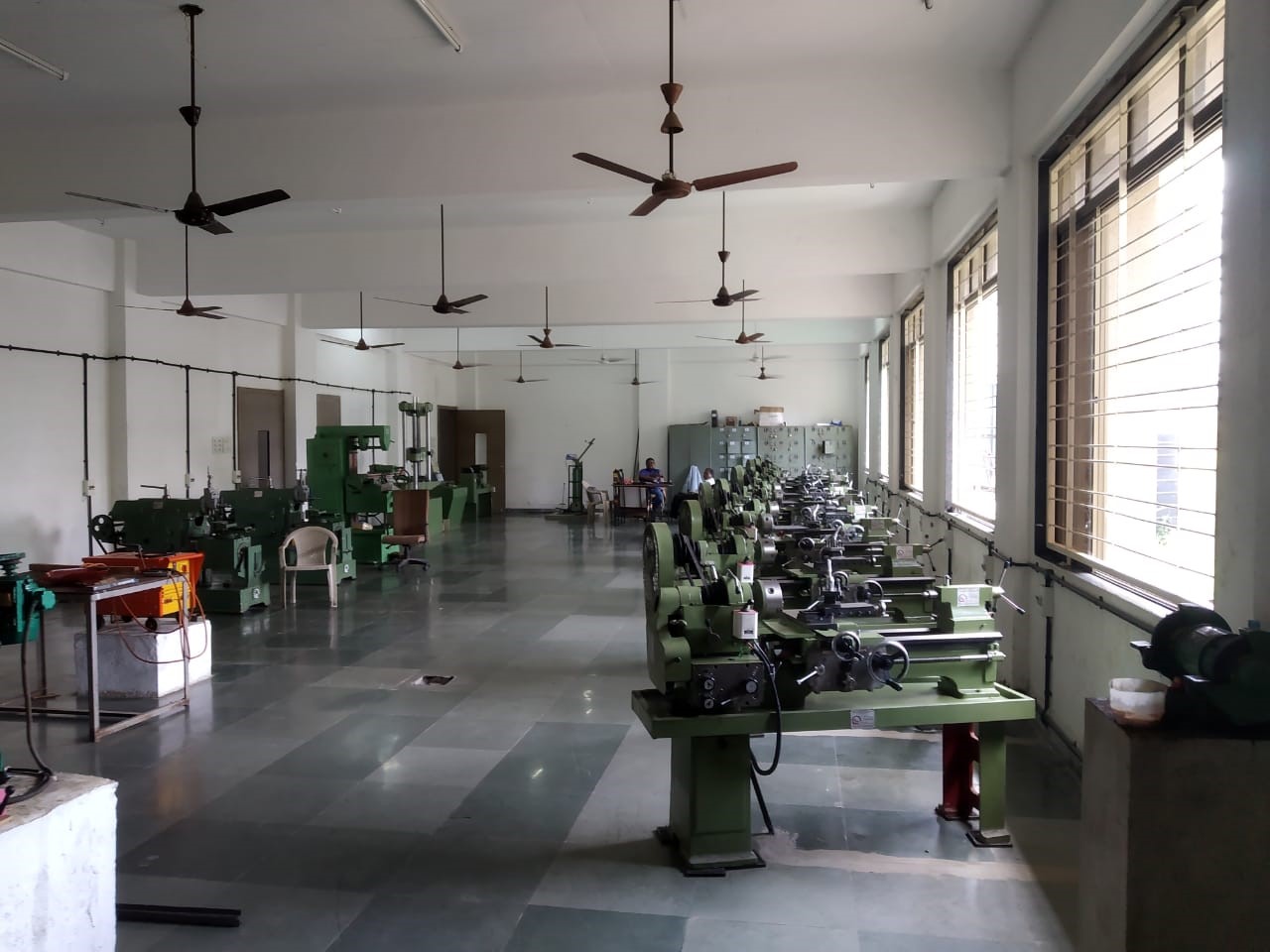
Machine Shop
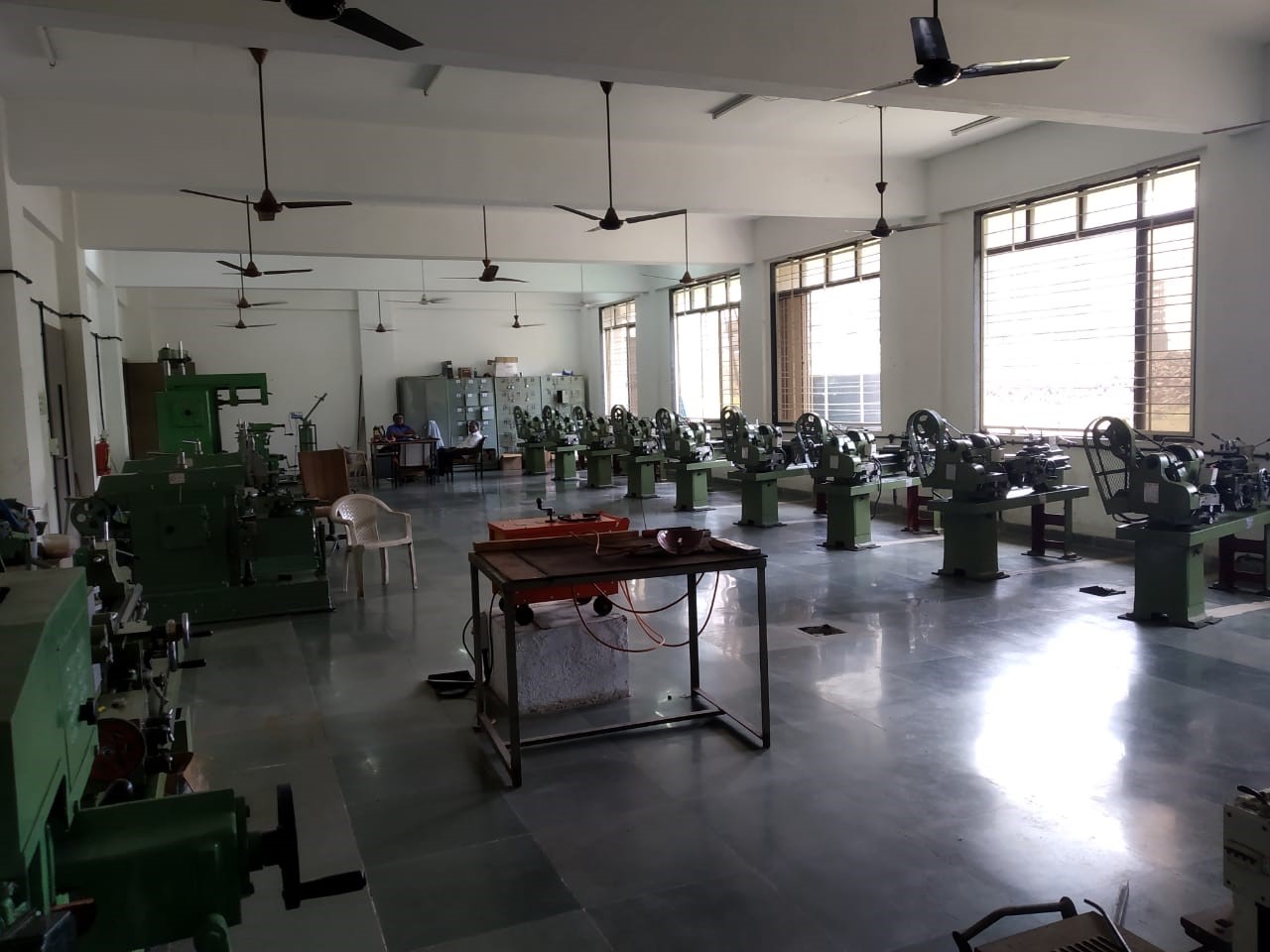
A machine shop is a facility with equipment and supplies for machining, a process where parts are cut, fabricated, and finished to prepare them for use. Machine shops are used in the creation of new parts, as well as repairs of existing equipment and parts. Their personnel may have specialized training, depending on the type of work done at the shop, as some machining tasks require a unique skill set, as well as a deep understanding of the kind of work the finished parts will be used for.
Machine shop is spacious, well developed typically consists of the following types of equipments.
-
- Metal lathe machine
- Milling machine
- Shaping Machine
- Grinding machine
- Drilling machines
- Welding machines
- Inspection equipments
- Welding machines
- Wood turning machines
- Power saw
- Cutting tools etc.
Academic Year: 2024-25
| Sr. No. | Date of Activity | Name of Event | Link |
|---|---|---|---|
| 28/02/2025 | Industrial Visit Report to Mayur Agrofesh,Mahape,Navi mumbai.Subject- HVACR | Click Here | |
| 13/01/2025 to 17/01/2025 | Value Added Course on “CNC Machine and Programming” | Click Here | |
| 14/10/2024 | Awareness session on “Careers in Defence as a Commissioned Officer” | Click Here | |
| 1/10/2024 | Workshop on “Materials and its Failure” | Click Here | |
| 26/09/2024 | AutoCAD Master’s Challenge event September | Click Here |
Academic Year: 2023-24
| Sr. No. | Date of Activity | Name of Event | Link |
|---|---|---|---|
| 16/4/2024 | Seminar on “Career and Innovation in Manufacturing Industries” | Click Here | |
| 11/3/2024 | AutoCAD Master’s Challenge event March | Click Here | |
| 12/2/2024 | Workshop on “Solidworks Simulation & ANSYS Software” | Click Here | |
| 16/10/2023 | Expert lecture on Bode Plot | Click Here | |
| 31/08/2023 | Seminar on “How to Write and Publish Research Paper?” | Click Here |
| Sr. No. | Academic Year | Link |
|---|---|---|
| 1 | 2025-26 | Academic Calender 2025-26 |
Department Clubs
- MESA
- SAE
| Date | Notice Descritpion | link |
|---|---|---|
| 09/10/2025 | MT Practical For DSE | Click Here |
| 01/10/2025 | Oral Practical Exam Notice | Click Here |
| 25/09/2025 | Odd Sem IA II | Click Here |
| 10/08/2025 | Notice Extra Lectures | Click Here |
| 25/08/2025 | SE_MINI PROJECT PRP 1 | Click Here |
| 14/08/2025 | BE Major Project | Click Here |
| 25/09/2025 | Odd Sem IA II | Click Here |
| 21/02/2025 | Internal Assesment – I | Click Here |
| 18/03/2025 | Mini Project PRP-II | Click Here |
| 13/03/2025 | KT Internal Assesment | Click Here |
Name: Prof. Vishwadeep Sardar
Email ID: hod.mechanical@sigce.edu.in
Mobile No.: 8080949306