
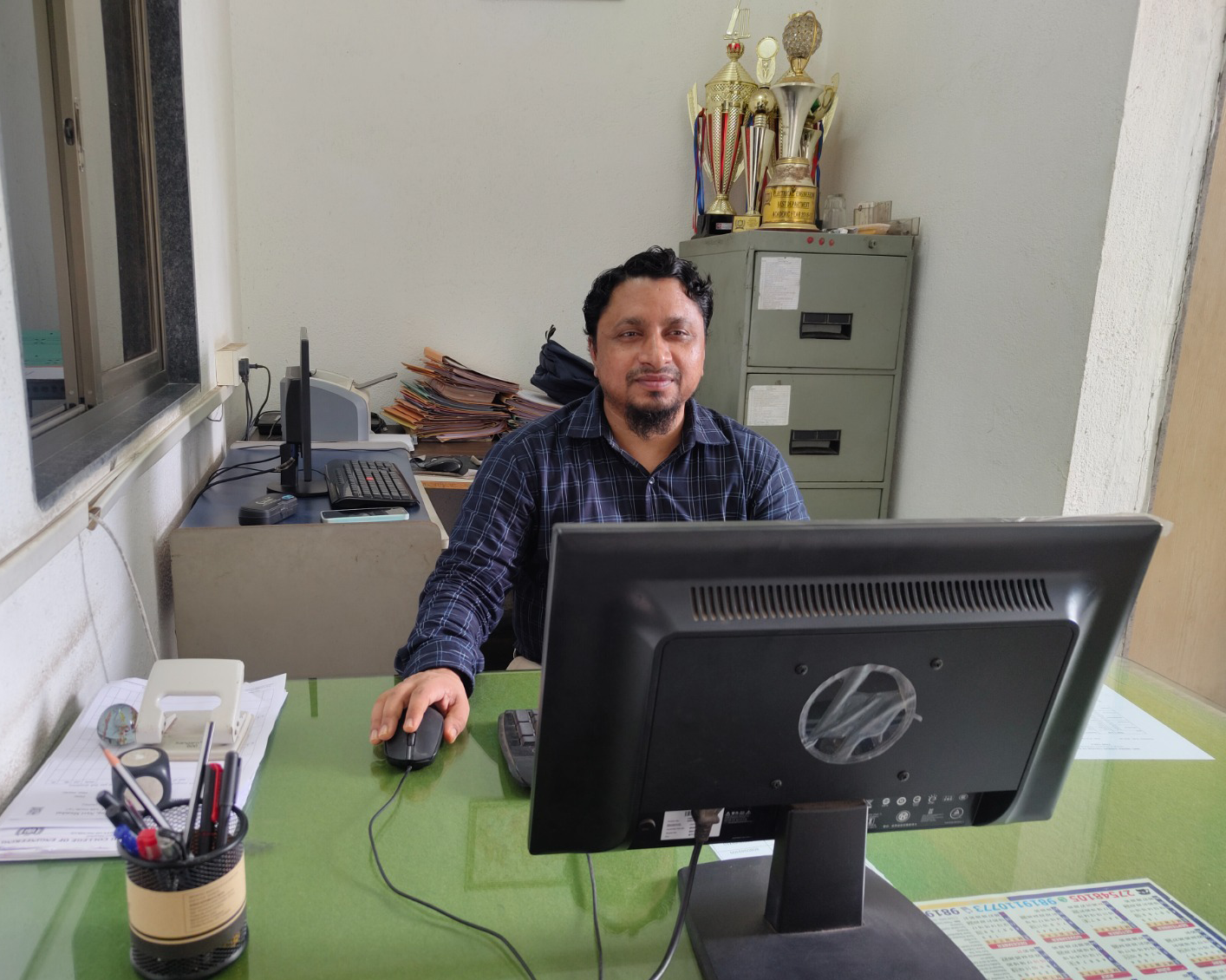
Mr. Mohd.Khursheed.Alam
H.O.D (Electrical Engineering DEPARTMENT)
M.Tech (Electrical)
Departmental laboratories are spacious and adequately equipped. Department is conducting Industrial visit & technical seminars from time to time to upgrade the knowledge of students and staffs. Also the department is sponsoring the staff members for higher studies and Research work. Department has good co-ordination between staff and students.Electrical Engineering is one of the core branches of engineering studies.
About Course details:
Most of the branches like Electronics and Telecommunication Engineering, Computer Science and Engineering, Applied Electronics, Electronics and Instrumentation, Information Technology have been emerged as a specialization from Electrical Engineering.
The major thrust in this course is related to the basic principles and detailed analysis of different types of equipment’s and systems for generation, transmission, distribution and utilization of Electrical Energy. The course also covers the study of electronic devices and circuits involved in measurement, instrumentation, control and protection of electrical equipment’s and conversion systems. Concept of computer and recent applications of computer based systems in design, analysis and efficient operation of power system, maintaining quality and security also included in the course.
Career Opportunities :
Electrical graduates are employed in Electricity Boards/Utility companies and large industries as engineers and managers, responsible for installation, maintenance, operation of power handling equipments and systems.
Industries manufacturing large electrical machines and equipment’s employ engineers in design, production and testing. Educational Institutions and Research establishments recruit electrical engineers as faculty and scientists.
The Electrical Engineering degree program prepares the graduates to enter a dynamic and rapidly changing field with career opportunities in Electrical Power, Integrated circuits, Robotics and Control. The demand for electric power is increasing rapidly and there by the electrical engineers are in great demand to meet the requirements. Electrical engineers are mainly employed in industries manufacturing electrical components and accessories, research and development department which work in energy saving devices and systems.
During the B. E. programme, the Electrical Engineers develop analytical skills and reasoning power along with computer knowledge and programming skills. This facilitates them to acquire employment also as software professionals. With little extra input, an Electrical Engineering graduate can easily find place in any area of Information Technology, which is the potential job market at present.
List of laboratory:
- Electrical Machine Lab
- Power Electronic / Basic Electronic Lab
- Electrical Measurement Lab / EII Lab
- B.E.E Lab / ADIC Lab
- Computer Lab
Vision of the College
To serve and have a transformative impact on society by constantly pursuing excellence in technical education, innovation and entrepreneurship for human development with strong ethical values.
Mission of the College
- Serve and help transform society by graduating talented, broadly educated engineers, equipped with state of art technology resources for developing sustainable solutions.
- Academic excellence in Science, Engineering and Technology through dedication to duty, commitment to research, innovation in learning and faith in human values.
- Cultivate the spirit of entrepreneurship and the connection between academia and industry that fosters problem solving through collaboration
- Enable the students to develop into outstanding professionals with high ethical standards capable of creating, developing and managing global engineering enterprises.
Vision of the Department
To achieve excellence in Electrical Engineering education through quality teaching, innovation, research, and entrepreneurship, nurturing ethically responsible engineers who contribute to sustainable technological advancement and societal development.
Mission of the Department
- Provide quality education in Electrical Engineering through outcome-based learning, modern laboratories, and state-of-the-art technologies to develop sustainable engineering solutions for society.
- Foster academic excellence by promoting research, innovation, critical thinking, lifelong learning, and professional ethics with a commitment to human values.
Program Outcomes (PO)
PO1: Engineering Knowledge: Apply knowledge of mathematics, natural science, computing, engineering fundamentals and an engineering specialization as specified in WK1 to WK4 respectively to develop the solution of complex engineering problems.
PO2: Problem Analysis: Identify, formulate, review research literature and analyze complex engineering problems reaching substantiated conclusions with consideration for sustainable development. (WK1 to WK4)
PO3: Design/Development of Solutions: Design creative solutions for complex engineering problems and design/develop systems/components/processes to meet identified needs with consideration for the public health and safety, whole-life cost, net zero carbon, culture, society and environment as required. (WK5)
PO4: Conduct Investigations of Complex Problems: Conduct investigations of complex engineering problems using research-based knowledge including design of experiments, modelling, analysis & interpretation of data to provide valid conclusions. (WK8).
PO5: Engineering Tool Usage: Create, select and apply appropriate techniques, resources and modern engineering & IT tools, including prediction and modelling recognizing their limitations to solve complex engineering problems. (WK2 and WK6)
PO6: The Engineer and The World: Analyze and evaluate societal and environmental aspects while solving complex engineering problems for its impact on sustainability with reference to economy, health, safety, legal framework, culture and environment. (WK1, WK5, and WK7).
PO7: Ethics: Apply ethical principles and commit to professional ethics, human values, diversity and inclusion; adhere to national & international laws. (WK9)
PO8: Individual and Collaborative Team work: Function effectively as an individual, and as a member or leader in diverse/multi-disciplinary teams.
PO9: Communication: Communicate effectively and inclusively within the engineering community and society at large, such as being able to comprehend and write effective reports and design documentation, make effective presentations considering cultural, language, and learning differences
PO10: Project Management and Finance: Apply knowledge and understanding of engineering management principles and economic decision-making and apply these to one’s own work, as a member and leader in a team, and to manage projects and in multidisciplinary environments.
PO11: Life-Long Learning: Recognize the need for, and have the preparation and ability for i) independent and life-long learning ii) adaptability to new and emerging technologies and iii) critical thinking in the broadest context of technological change.
Program Specific Outcome (PSO)
- Apply the principles of Electrical Engineering to analyze, design, operate, test, protect, and maintain electrical machines, power systems, power electronics, control systems, and renewable energy systems using modern engineering practices & tools.
- Develop innovative, sustainable, and energy-efficient engineering solutions through research, industry collaboration, entrepreneurship, teamwork, and ethical professional practices to address real-world challenges.
Teaching Faculty
Non-Teaching Staff
Board of Studies
| S.N | Name | Post |
|---|---|---|
| 1 | Prof. M.K. Alam | HoD |
| 2 | Dr. S. R. Deore | Member |
| 3 | Dr. Bhushan P. Saoji | Member |
| 4 | Dr. Chandrakant M Wankhede | Member |
| 5 | Dr. Ambadas Mane | Member |
| 6 | Dr. Sangamesh Sakri | Member |
| 7 | Mr. Milind D Raje | Member |
| 8 | Prof. Atul Kale | Member |
| 9 | Prof. N. B. Joshi | Member |
| 10 | Prof. A N Gawande | Faculty |
| 11 | Prof. Mohd. Ansari | Faculty |
| 12 | Prof. Sarika Matey | Faculty |
| 13 | Prof. D D Gote | Faculty |
| 14 | Prof. U V Pawar | Faculty |
| 15 | Prof. C M Chaudhari | Faculty |
| 16 | Prof. Rashmi Patil
|
Faculty |
| 17 | Prof. Jayashri Rudrakanthawar | Faculty |
| 18 | Dr. Shivanand Konade | Faculty |
Roles and Responsibilities
- Curriculum Development: Framing, reviewing, and updating syllabi and course content.
- Quality Assurance: Ensuring academic standards, course outcomes, and program objectives align with current trends and market demands.
- Reporting: Making recommendations to the Academic Council.
Composition
| S.N. | Name | Committee Position | Dept/Section Representation |
|---|---|---|---|
| Prof M.K. Alam
|
Chairperson | HoD Electrical | |
| Prof N.B Joshi | Member | Faculty of Electrical | |
| Prof A.N. Gawande | Member | Faculty of Electrical | |
| Prof. Ansari Mohd | Member | Faculty of Electrical | |
| Prof. Sarika Matey | Member | Faculty of Electrical | |
| Dr. Madhawi Kumari | Member | Professor, LTCOE, Academician (External) | |
| Dr Ayush Saxena | Member | Assistant Professor,VJTI, Academician (External) | |
| Mr Vishwajeet
Reddy
|
Member | Assistant Engineer MSEDCL, (Industry / Alumni) | |
| Dr Sachin Umbarkar | Member | General Manager &Technical Expert,Schneider
Electric Power Ltd.( Industry / Alumni) |
|
| Ms Simeen Shaikh | Member | Maharashtra Estate Electricity Transmission Co
limited, Assistant Engineer, ( Industry / Alumni) |
|
| Mr. Richard Rizario | Member | Maharashtra Estate Electricity Distribution limited, Assistant Engineer, ( Industry / Alumni) | |
| Mr Yash Bagul | Member | Student BE Electrical (A.Y.25-26) | |
| Ms. Bhavana
Dhamankar
|
Member | Student TE Electrical (A.Y.25-26) | |
| Ms.Kavya Diggi | Member | Student SE Electrical (A.Y.25-26) | |
| Mr Sandeep
Dhamankar
|
Member | Sales Marketing officer, VD Jewels, Parent | |
| Ms Prabha Bagul | Member | Sr Teacher,Maratha Vidya Prasarakh (MVP), Parent | |
| Mr.Anil Diggi | Member | Owner,K.K,Enterprises, Parent |
Roles and Responsibilities
- Curriculum & Academic Improvement
- Strategic Planning
- Student Support & Development
- Performance Monitoring
| S.N. | Name and Post | Position |
|---|---|---|
| 1 | Prof. M.K.Alam - HoD | Chairperson |
| 2. | Prof. Sarika Matey - Faculty | Coordinator |
| 3. | Prof. Mohd. Ansari - Faculty | Member |
| 4. | Prof. Rashmi Patil - Faculty | Member |
Roles and Responsibilities
- It is established within departments to ensure structured evaluation at the program level.
- PAQIC frequently meets to evaluate student performance, analyze feedback from stakeholders (parents/alumni), and implement remedial actions for improvement.
- It is responsible for assessing program educational objectives (PEOs), mapping curriculum, and enhancing student learning outcomes.
Other Committees :
- Class Advisor :
- Prof. Rashmi Patil
- Prof. U. V Pawar
- Dr. Shivanand Konade
- Exam Coordinator :
- Prof. U. V. Pawar
- Prof. Jayashri Rudrakantawar
- Industrial Visit Coordinator :
- Shivanand Konade
- Alumni Coordinator :
- Prof. Mohd. Anasari
- NPTEL/MOOC courses Incharge :
- Prof. C.M. Chaudhari
- Media Coordinator :
- Prof. Sarika Matey
Syllabus:
| Name | Scheme | Link |
|---|---|---|
| Second Year Syllabus | SIGCE NEP R25 Y2 | Link |
| Third Year Syllabus | TE NEP 2026-27 | Link |
| Final Year Syllabus | BE ‘C’ Scheme 2022-23 | Link |
Credit Distribution Structure:
| Broad Category Code | Course Catg. Code | Semester🡪 Course Type | 1 | 2 | 3 | 4 | 5 | 6 | 7 | 8 | Sub-Total | Tot | % |
|---|---|---|---|---|---|---|---|---|---|---|---|---|---|
| BSES | BS | Basic Science | 07 | 07 | 03 | 03 | 20 | 29 | 18.13 | ||||
| ES | Engineering Science | 06 | 03 | 09 | |||||||||
| PRC
(Program Related Courses) |
PC | Program Core | 03 | 11 | 11 | 08 | 08 | 04 | 45 | 80 | 50 | ||
| PE | Program Elective | 04 | 03 | 06 | 13 | ||||||||
| RM | Research Methodology | 02 | 02 | ||||||||||
| CP | Community Engagement Project | 02 | 02 | ||||||||||
| PR | Project | 01 | 01 | 02 | 02 | 06 | |||||||
| IN | Internship / OJT | 12 | 12 | ||||||||||
| MDM + OE | MM | Multidisciplinary Minor | 03 | 03 | 04 | 04 | 14 | 22 | 13.75 | ||||
| OE | Open Elective | 02 | 02 | 02 | 02 | 08 | |||||||
| SEC (Skill Enhance-ment Courses) |
VS | Voc. and Skill Enhancement | 02 | 04 | 02 | 03 | 01 | 12 | 22 | 13.75 | |||
| AE | Ability Enhancement | 02 | 01 | 01 | 04 | ||||||||
| IK | Indian Knowledge System | 02 | 02 | ||||||||||
| VE | Value Education | 02 | 02 | 04 | |||||||||
| HSSM | EM | Entrepreneurship / Mgmt. | 02 | 02 | 04 | 04 | 2.50 | ||||||
| CC (LLC) | CC | Co-Curricular | 02 | 01 | 03 | 03 | 1.87 | ||||||
| Total | 21 | 21 | 22 | 22 | 19 | 19 | 20 | 16 | 160 | 160 | 100 |
Course Detail:
Semester III
| Course Code | Broad Catg. | Course Name | Course Choice | Teaching Scheme (Hrs) | Credit Assigned | ||||||||||||||||
|---|---|---|---|---|---|---|---|---|---|---|---|---|---|---|---|---|---|---|---|---|---|
| CR | Lab | SL | TE | L | T | P/D | TC | ||||||||||||||
| L | T | P | D | ||||||||||||||||||
| EEBS231 | BS | Applied Mathematics for Electrical Engineering | Compulsory | 2 | 1 | 0 | 0 | 3 | 6 | 2 | 1 | - | 3 | ||||||||
| EEPC231 | PC | Electrical Machines - I | Compulsory | 3 | 0 | 2 | 0 | 3 | 8 | 3 | 1 | 4 | |||||||||
| EEPC232 | PC | Electrical Power System -I | Compulsory | 3 | 0 | 2 | 0 | 3 | 8 | 3 | 1 | 4 | |||||||||
| EEPC233 | PC | Electrical and Electronics Measurement | Compulsory | 2 | 0 | 2 | 0 | 2 | 6 | 2 | 1 | 3 | |||||||||
| IGOE23X | OE | Open Elective | Choice Based* | 2 | - | - | - | 2 | 4 | 2 | - | - | 2 | ||||||||
| EEVS231 | VS | Skill Enhancement Course- MATLAB | Compulsory | - | - | 2 | 2 | - | 4 | - | - | 2 | 2 | ||||||||
| IGAE231 | AE | Comprehensive Soft Skill and Professional Development | Compulsory | - | - | - | 2 | - | 2 | - | - | 1 | 1 | ||||||||
| IGEM231 | EM | Entrepreneurship and Business Model Development | Compulsory | - | - | 2 | 2 | - | 4 | - | - | 2 | 2 | ||||||||
| IGCC23x | CC | Cocurricular Course | Choice Based* | - | - | 2 | - | - | 2 | - | - | 1 | 1 | ||||||||
| TOTAL | 12 | 1 | 12 | 6 | 13 | 44 | 12 | 1 | 9 | 22 | |||||||||||
Semester IV
| Course Code | Broad Catg. | Course Name | Course Choice | Teaching Scheme (Hrs) | Credit Assigned | |||||||||||||||||||||||||||
|---|---|---|---|---|---|---|---|---|---|---|---|---|---|---|---|---|---|---|---|---|---|---|---|---|---|---|---|---|---|---|---|---|
| CR | Lab | SL | TE | L | T | P/D | TC | |||||||||||||||||||||||||
| L | T | P | D | |||||||||||||||||||||||||||||
| EEBS241 | BS | Applied Engineering Mathematics for Circuit Theory and Signal Processing | Compulsory | 2 | 0 | 2 | 0 | 2 | 6 | 2 | 1 | 3 | ||||||||||||||||||||
| EEPC241 | PC | Electrical Machines -II | Compulsory | 3 | 0 | 2 | 0 | 3 | 8 | 3 | 1 | 4 | ||||||||||||||||||||
| EEPC242 | PC | Electrical Power Systems -II | Compulsory | 3 | 0 | 2 | 0 | 3 | 8 | 3 | 1 | 4 | ||||||||||||||||||||
| EEPC243 | PC | Electromagnetic Field and Waves | Compulsory | 3 | 0 | 0 | 0 | 3 | 6 | 3 | 0 | 3 | ||||||||||||||||||||
| IGOE24x | OE | Open Elective | Choice Based* | 2 | - | - | - | 2 | 4 | 2 | - | - | 2 | |||||||||||||||||||
| EEVS242 | VS | AI TOOLS | Compulsory | - | - | 2 | 2 | - | 4 | - | - | 2 | 2 | |||||||||||||||||||
| EEVS241 | VS | Engineering Fundamentals and Technical Skills | Compulsory | - | - | - | 2 | - | 2 | - | - | 1 | 1 | |||||||||||||||||||
| IGEM241 | EM | Design Thinking | Compulsory | - | - | 2 | 2 | - | 4 | - | - | 2 | 2 | |||||||||||||||||||
| EEPR241 | PR | Mini Project-I | Compulsory | 2 | 2 | 1 | 1 | |||||||||||||||||||||||||
| TOTAL | 13 | - | 12 | 6 | 11 | 44 | 13 | - | 9 | 22 | ||||||||||||||||||||||
Semester V
| Sr. No. | Subject |
|---|---|
| 1 | Electrical AC Machines II |
| 2 | Electrical Power System II |
| 3 | Control System |
| 4 | Electromagnetic Field and Wave |
| 5 | Renewable Energy Sources (Department Optional Course - 1) |
| 6 | Electrical AC Machines Lab II |
| 7 | Simulation Lab II |
| 8 | Control System Lab |
| 9 | Professional Communication and Ethics-II |
| 10 | Mini Project – 2 A |
| 11 | Aptitude and Reasoning Skills – For Employability (Audit Course) |
Semester VI
| Sr. No. | Subject |
|---|---|
| 1 | Power System Protection & Switchgear |
| 2 | Microcontroller Applications |
| 3 | Control System Design |
| 4 | Signals and Systems |
| 5 | Department Optional Course – 2
|
| 6 | Power System Protection & Switchgear Lab |
| 7 | Microcontroller Applications Lab |
| 8 | Control System Design Lab |
| 9 | SBL-III: Industrial Automation Lab |
| 10 | Mini Project – 2 B |
| 11 | Advanced Engineering Fundamentals and Technical Skills (Audit Course) |
Semester VII
| Sr. No. | Subject |
|---|---|
| 1 | Electrical Drives & Control |
| 2 | Electrical Power System III |
| 3 | Department Optional Course – 3
|
| 4 | Department Optional Course – 4
|
| 5 | Institute Optional Course – 1
|
| 6 | Major Project I |
Semester VIII
| Sr. No. | Subject |
|---|---|
| 1 | Design, Management and Auditing of Electrical Systems |
| 2 | Department Optional Course – 5
|
| 3 | Department Optional Course – 6
|
| 4 | Institute Optional Course – 2
|
| 5 | Electrical System Design, Management and Auditing Lab |
| 6 | Measurement and Instrumentation Lab |
| 7 | Major Project II |
Lab 1: BASIC AND POWER ELECTRONIC LAB
Overview
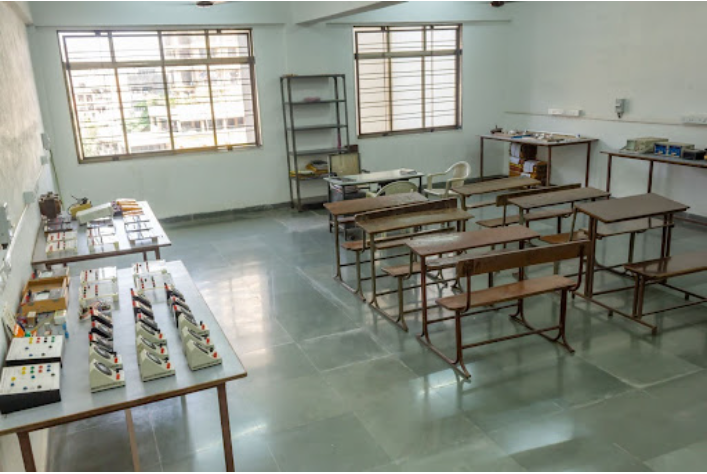
The lab consists of all essential equipment, kits, components and meters required for the experiments such as SCR, TRIAC, DIAC, UJT, Pulse Transformer, Diode, Zener Diode, BJT, Connecting wires, Breadboard, CRO, Power Supplies, Ammeter, Voltmeter, Multimeter, Micro-ammeter. The lab is spacious and can accommodate 20 students at a time.
Pictures
Lab 2 : Electrical Measurement and Power System Lab
Overview
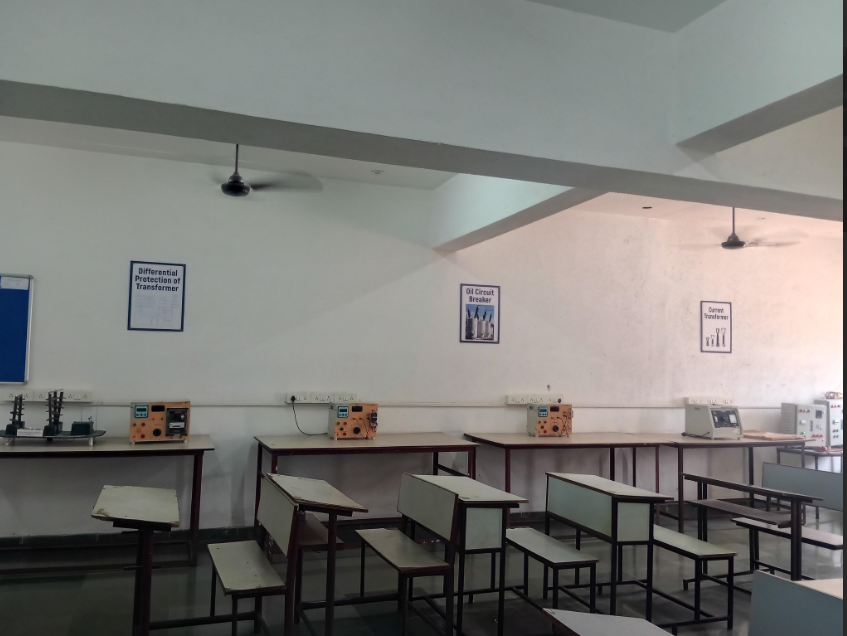
The lab consists of all essential equipment, kits, components and meters required for the experiments such as Energy meter, Load Bank, Maxwell’s bridge, Ballistic Galvanometer, Megger, CT, PT, Connecting wires, Breadboard. LVDT, Thermistor, Thermocouple, CRO, Power Supplies, Ammeter, Voltmeter, Multimeter, Micro–Ammeter. The lab is spacious and can accommodate 30 students at a time.
The Power System Protection and Switchgear Lab is designed to provide hands-on experience with the protection and switching systems used in power transmission and distribution systems. Students will learn to design, test, and operate protection schemes and switchgear systems to ensure reliable and efficient operation of power systems. Laboratory is well equipped with latest power system Switchgear equipments such as testing of Fuse & MCB Kit, Testing of Contactor & OLR, Testing of dielectric strength of transformer oil, Testing of IDMT relay, Protection of three phase induction motor against single phasing & Earth fault protection of three phase induction motor etc. The lab is spacious and can accommodate 30 students at a time.
Pictures
Lab 3: BASIC ELECTRICAL AND ELECTRONICS LAB
Overview
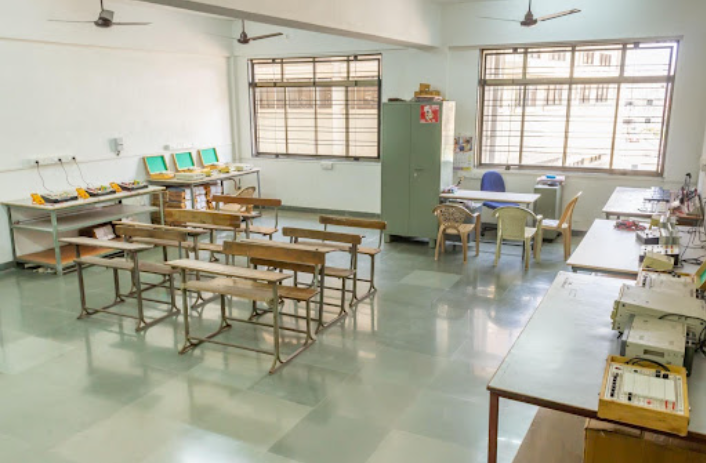
The Lab consists of all essential equipment, kits, components and meters required for the experiments such as The venin Theorem Kit, Superposition Theorem Kit, Norton Theorem Kit, Maximum Power Transfer Theorem Kit, KVL Kit, KCL Kit. CRO, Power Supplies, Ammeter, Voltmeter, Multimeter, Auto- Transformer, Ph Transformer, Pulse Transformer, Capacitor, Rheostat, Load Bank. Diode, Dual DC regulated power supply, cut section model of DC motor, Three phase resistive load 15 amp, Load per step/per phase 1 amp, 7 segment decoder trainer kit, Voltage regulation characteristics of Zener diode kit, study of node analysis by Ammeter & Voltmeter , Study of mesh analysis by ammeter & Voltmeter kit , Switching action of BJT trainer kit. The lab is spacious and can accommodate 30 students at a time.
Pictures
Lab 4: ELECTRICAL MACHINE LAB
Overview
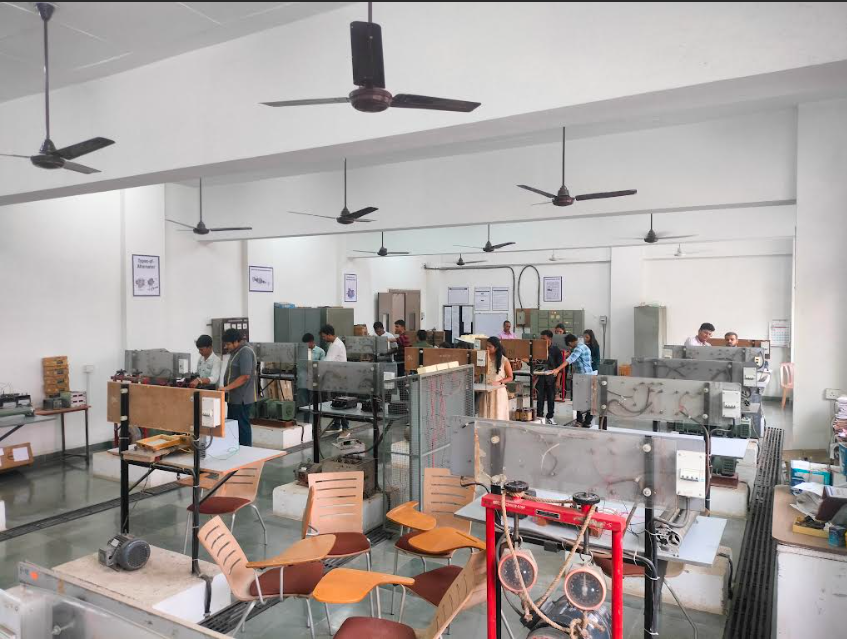
Lab consists all essential equipments, kits, components and meters required for the Experiments such as D.C Shunt Motor, 3-Ph Squirrel cage / Slip Ring Induction Motor, D.C Series Motor, 3-Ph Alternators, Universal Motor, 1-Ph & 3 -Ph Transformers, 3-Ph Rectifiers, Ward-Leonard Set, Auto Transformer, Synchronous Motor, Digital multimeter, Digital Tachometer, Tachometer, Ammeter, Voltmeter, Wattmeter. The lab is spacious and can accommodate 30 students at a time.
Pictures
Lab 5: ELECTRICAL COMPUTING LAB
Overview
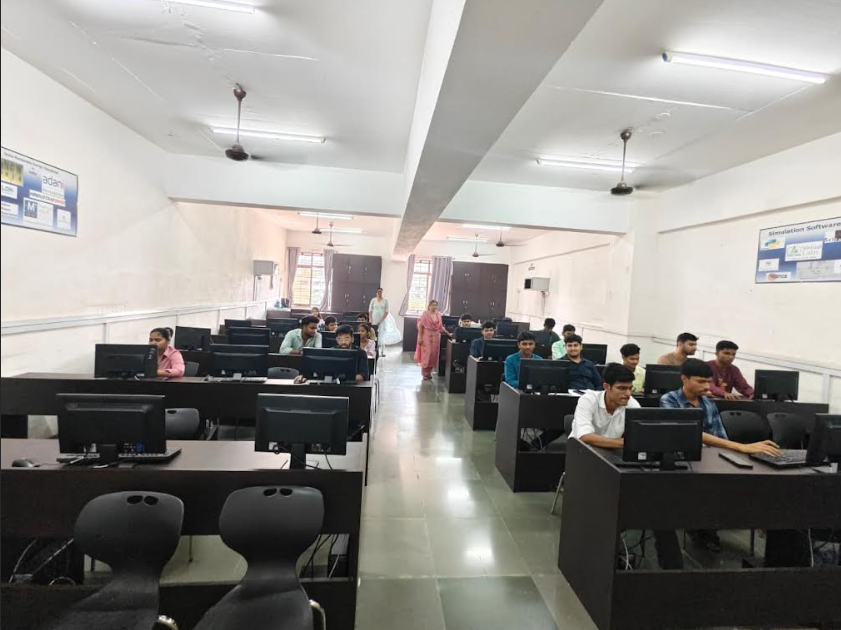
The laboratory is well equipped with the latest HP intel core i5 9th generation computers. The laboratory is spacious and can accommodate 30 students at a time. The computers are loaded with the latest softwares and printers.
We will be conducting the practicals of subjects like Simulation lab I,II & III, Control System Design, Python Programming Lab, Power Electronics Design , Microcontroller application, Industrial Automation , & Project.
Pictures
Lab 5: Electrical Project Lab
Overview
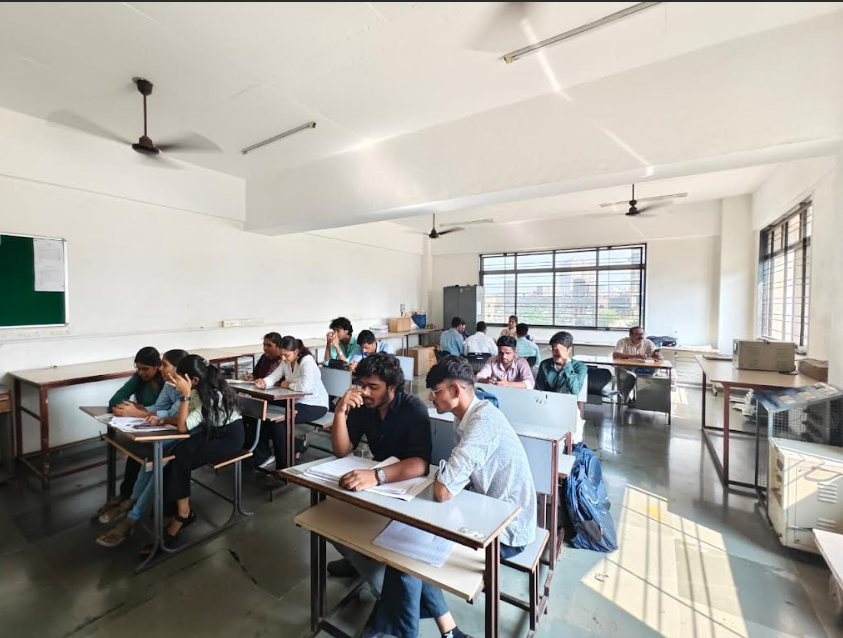
The Lab consists of all the required materials for PCB designing and fabrication. All the miniproject and Major project testing is done in this lab. All the successful projects are kept in the lab for reference to new students. The lab is spacious and can accommodate 30 students at a time.
Pictures
Academic Year: 2025-26
| Sr. No. | Date of Activity | Name of Event | Link |
|---|---|---|---|
| 13/10/2025 | HVDC Padghe Visit | Click Here | |
| 13/10/2025 | Industrial Visit to ‘HVDC Padaghe 1500KV/500 KV Substations | Click Here | |
| 01/10/2025 | Tree Plantation Program under ‘Save the Enviornment’ | Click Here | |
| 01/10/2025 | Seminar on “Skilling Managers for Professional Success” By Konkan Railway Professional | Click Here | |
| 25/09/2025 | Kokan Railway | Click Here | |
| 04/09/2025 | Seminar on ‘Renewable Energy Connected HVDC Transmission System’ | Click Here | |
| 14/08/2025 | Energy Audit Report | Click Here | |
| 14/08/2025 | Workshop ‘Energy Audit and Management’ | Click Here |
Academic Year: 2024-25
| Sr. No. | Date of Activity | Name of Event | Link |
|---|---|---|---|
| 16/07/2025 | Seminar on “Skilling Managers for Professional Success” By Konkan Railway Professional | Click Here | |
| 24/03/2025 | Seminar on End to End Open Sourse Circuit Design | Click Here | |
| 24/03/2025 | Industrial visit at Prolific, Center for PLC & Scada at Thane | Click Here | |
| 25/02/2025 | Industrial visit at Substation, Mahape | Click Here | |
| 01/10/2024 | Cleanliness drive under ‘Swatch Bharat Abhiyan’ | Click Here | |
| 01/10/2024 | Tree Plantation Program under ‘Save the Enviornment’ | Click Here | |
| 10/10/2024 | Industrial Visit to ‘HVDC Padaghe 1500KV/500 KV Substations | Click Here |
Academic Year: 2023-24
| Sr. No. | Date of Activity | Name of Event | Link |
|---|---|---|---|
| 29/07/2024 to 30/07/2024 & 07/08/2024 to 09/08/2024 | Workshop Skill Up 2.0 by Engineers Club | Click Here | |
| 16/07/2024 | Seminar on ‘Recent Advancement in Electrical Vehicals & Drives Technology’ | Click Here | |
| 10/07/2024 | Seminar on ‘FPGA Implementation of RNN for Solar Inverters’ | Click Here | |
| 12/06/2024 & 13/06/2024 | Two Days online webinar on Let’s Chat FOSS! & Work Ethics and Experiences | Click Here | |
| 08/04/2024 | Swachh Bharat Abhiyaan | Click Here | |
| 08/04/2024 | TREE PLANTATION CAMPAIGN | Click Here | |
| 15/02/2024 | Pathway to Entrepreneurship | Click Here | |
| 14/02/2024 | Industrial Visit at Milestone Institute of Technology | Click Here | |
| 06/02/2024 | Industrial Visit at Mahatransco Mahape – 220 KV/22 KV Substation | Click Here | |
| 20/10/2023 | Seminar & Demonstration on Drive Technology by Wohlstand Enterprises | Click Here |
| Sr. No. | Academic Year | Link |
|---|---|---|
| 1 | 2025-26 | Academic Calender 2025-26: Even Sem |
| Date | Notice Descritpion | Link |
|---|---|---|
| 09/10/2026 | Oral/Practical Exam Time table | Click Here |
| 01/09/2026 | Unit Test-II Examination Schedule – October 2026 | Click Here |
| 20/08/2026 | UT-1 Time Table | Click Here |
| 10/10/2025 | Oral & Practical Exam Time table_winter 2025 | Click Here |
| 4/7/2025 | Miniproject 2B -Presentation II Notice | Click Here |
| 3/25/2025 | Unit Test II | Click Here |
Name of Company / Institution
- Overview of Collaboration
The Electrical Department has signed the MOU with Dol Motors Co. Pvt Ltd. It is the group established in 1978 as a manufacturer of motors.
- Events
Industrial Visits are conducted at the Dol Motors Rabale.
- MoU Link
Email id: hod.electrical@sigce.edu.in
Mobile Number: 8080949308
Name: Prof. Mohd.khursheed.Alam
Email ID: hod.electrical@sigce.edu.in
Mobile No.: 8080949309